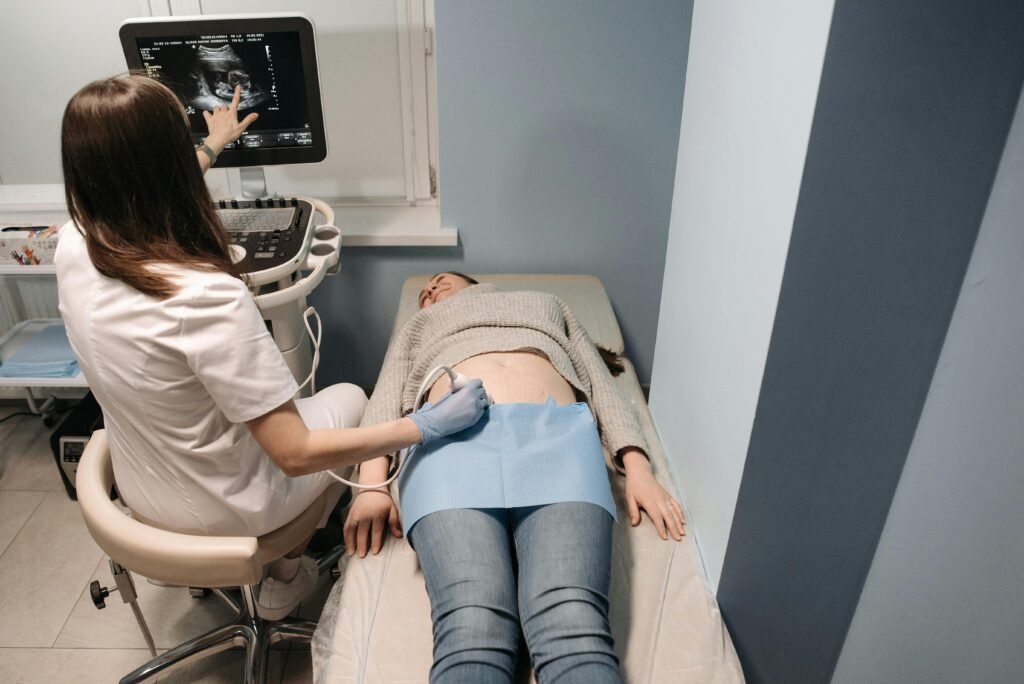
For too long, endometriosis has hidden in silence, and its diagnosis has involved invasive surgery. The Ziwig Endotest is a breakthrough in women’s health: a non-invasive, pain-free saliva test that can detect endometriosis with high accuracy. If you are suffering from chronic pelvic pain, debilitating periods, fatigue, or digestive struggles, this test offers a new path to answers without the need for immediate surgery.
Developed by the French biotech company Ziwig, this test analyses specific microRNA (miRNA) molecules in your saliva to identify the presence of endometriosis.
What Does It Screen For?
The test is specifically designed to detect endometriosis, a condition where tissue similar to the womb lining grows outside the uterus. It helps your gynaecologist determine if your symptoms are likely caused by endometriosis, potentially avoiding unnecessary diagnostic laparoscopy (keyhole surgery).
How Does It Work?
- Simple Saliva Sample: You will be asked to provide a small saliva sample. There are no needles, no speculum, and no discomfort—just spitting into a tube.
- Molecular Analysis: The sample is sent to a specialised lab where next-generation sequencing (NGS) analyses 109 specific microRNAs. Artificial intelligence (AI) then interprets this complex molecular signature.
- Clear Results: The test provides a result indicating the likelihood of endometriosis, helping to guide your next steps.
Accuracy and Performance
The Ziwig Endotest is supported by robust clinical evidence from a large, independent, multicentre study involving nearly 1,000 women, published in the prestigious journal NEJM Evidence.
- 97.3% Sensitivity: It correctly identifies over 97 out of every 100 women who have endometriosis, meaning it misses very few cases.
- 94.1% Specificity: It correctly rules out endometriosis in over 94 out of every 100 women who do not have the condition.
- 96.6% Overall Accuracy: The test has a high probability of providing a correct result, whether positive or negative.
- Better than Imaging: The test has a significantly lower rate of misclassification (4.6%) compared to imaging methods like transvaginal ultrasound or MRI (27.2%). This means it is far more reliable for getting the right diagnosis.
Who Is This Test For?
This test is designed for women between 18 and 43 years old who have symptoms suggestive of endometriosis, such as chronic pelvic pain, especially if initial ultrasound or MRI scans are normal or inconclusive.
Your gynaecologist may offer it as a non-invasive first step to help decide whether you need a laparoscopy.
Benefits of the Ziwig Endotest
- Patient-Friendly: A simple saliva sample is painless and non-invasive, making it a much kinder experience than diagnostic surgery.
- Highly Accurate: Provides high confidence in both a positive and negative result, helping to end years of diagnostic delay.
- Quick & Efficient: Helps accelerate the diagnostic pathway, reducing long waits for surgery and providing clarity sooner.
- Reduces Unnecessary Surgery: By accurately ruling out endometriosis, the test can spare many women from having a diagnostic laparoscopy they do not need.
Frequently Asked Questions
Q: Is the test painful or invasive?
A: No, not at all. It is a simple saliva test that is completely painless and non-invasive.
Q: What does a positive test result mean?
A: A positive result means the test has detected the molecular signature associated with endometriosis. This makes the condition likely, and your gynaecologist will discuss the next steps with you, which may include medical management or surgical confirmation and treatment.
Q: What does a negative test result mean?
A: A negative result is highly reassuring. With a very high sensitivity, it reliably indicates that endometriosis is not the cause of your symptoms. Your gynaecologist will then investigate other potential causes.
Q: Can this test replace laparoscopy?
A: It represents a major advancement that could replace diagnostic laparoscopy for many women by providing a non-invasive diagnosis. However, a laparoscopy remains the only way to both confirm a diagnosis and surgically treat endometriosis in the same procedure.
Q: How is this different from other diagnostic methods?
A: Unlike a transvaginal ultrasound or MRI, which look for structural signs of endometriosis and can miss many cases, this test detects molecular changes associated with the disease. It has been shown to be far more accurate than imaging in classifying patients correctly.
eGynaecologist Advice
- If you have persistent pelvic pain or other symptoms of endometriosis, it is crucial to discuss them with your gynaecologist. The traditional diagnostic pathway can take an average of 7-10 years and may involve invasive surgery.
- You should talk to your gynaecologist to see if this innovative saliva test is right for you; it could be the key to ending your diagnostic trek and starting a personalised treatment plan sooner.